Beyond flood prevention: How nature-based solutions and insurance could better protect vulnerable communities
This guest article was authored by Dr. Hannes Zander, Director at Integrated Sustainable Development (ISD), a Swiss operational foundation that brings together multidisciplinary teams to deliver sustainability and climate-resilience projects in under-resourced contexts. ISD is a member of SCBF and currently leads a project, funded by Swiss Re Foundation, to mainstream the Sponge City approach in urban India.
When monsoon floods hit low-income neighborhoods in India, households and small businesses lose stock, income, and housing, yet most of this loss never becomes an insurance claim. Nature-based solutions such as Sponge Parks can reduce flood risk before losses occur, and ISD Foundation’s pilots in Chennai and Mumbai are testing how their performance can be measured. Demonstrating that risk reduction is what could make its financial value visible to insurers and investors. Trusted community organizations such as Mahila Housing Trust and SEWA can then connect low-income households with protection for the losses prevention cannot eliminate.
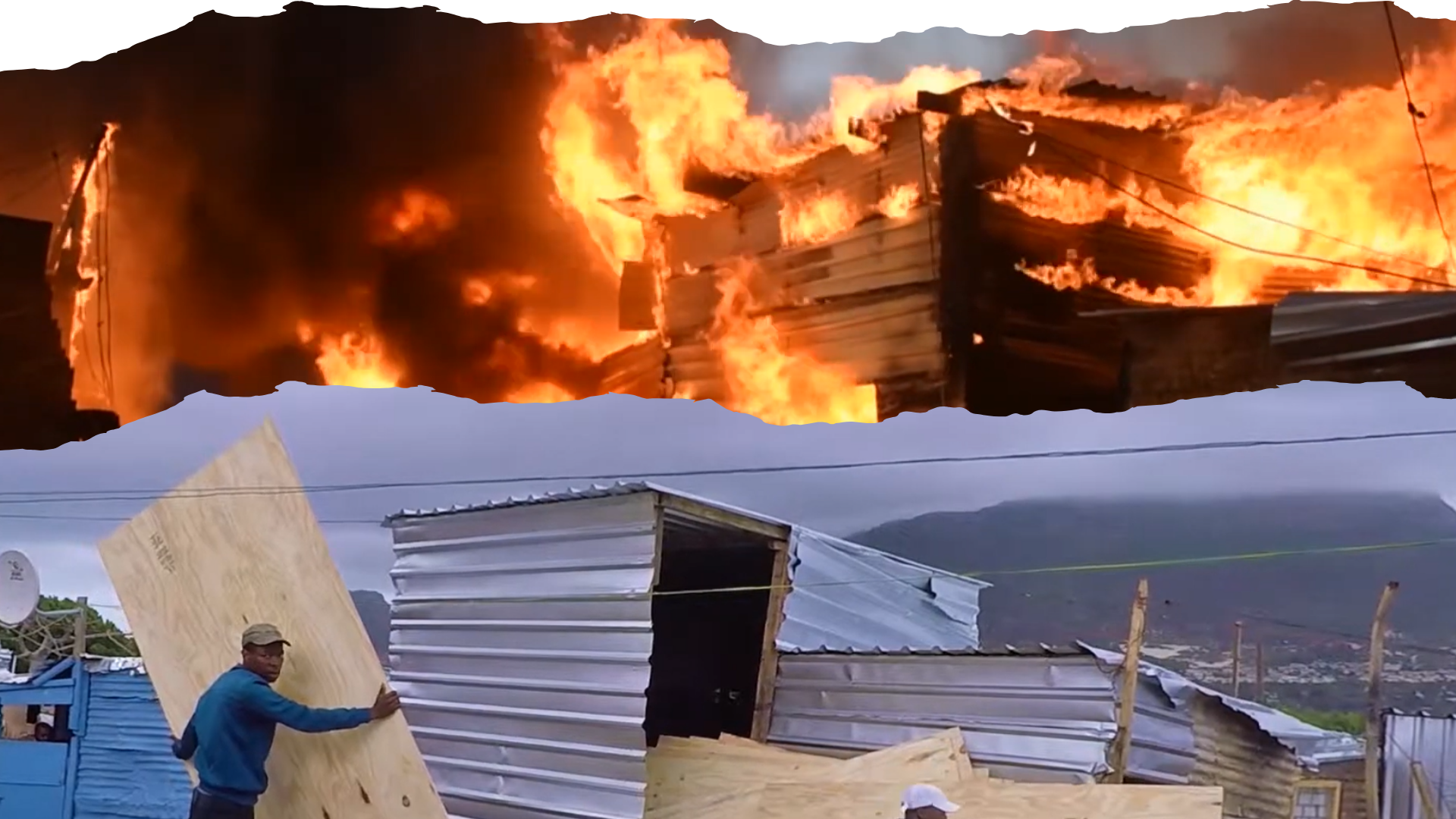
When monsoon flooding enters a low-income neighborhood, the financial shock is not limited to damaged buildings. A street vendor can lose stock and days of income. A household may face temporary accommodation, transport, or replacement costs. A small business may be unable to reopen. Yet much of this loss never appears in an insurance claim.
In India, the scale of the challenge is growing as cities expand. The country’s urban population is expected to nearly double between 2020 and 2050,[i]while urbanization continues to replace wetlands and other permeable landscapes with concrete and asphalt. The World Bank estimates that urban pluvial flooding in India already causes around USD 4 billion in annual losses and could reach USD 14–30 billion by 2070.[ii]
Over the past two decades, floods have accounted for about 63% of India’s annual economic losses from natural catastrophes.[iii]Yet insurance protection remains very limited: Swiss Re Institute estimates that 93% of the country’s natural-catastrophe exposure is uninsured.[iv]
Prevention matters most where insurance coverage is low
Insurance alone cannot be the response. Physical prevention matters at least as much, particularly where households and small businesses have little financial protection after a disaster. Urban nature-based solutions (NbS), including Sponge Parks, can reduce flood risk before losses occur while also providing cooling, biodiversity benefits, groundwater recharge, and recreational public space.
This raises the central question of this article: When a city invests in nature-based flood prevention, can the economic value of avoided losses become visible enough to influence investment and insurance decisions and, ultimately, improve financial protection for the people living with the risk?
The relationship between NbS and insurance is still emerging. There is growing interest in bringing the protective value of nature into risk models, pricing, and insurance products. However, this is far from routine practice.[v]The question is what would need to change for proven prevention to influence financial decisions.
Sponge Parks as resilience infrastructure
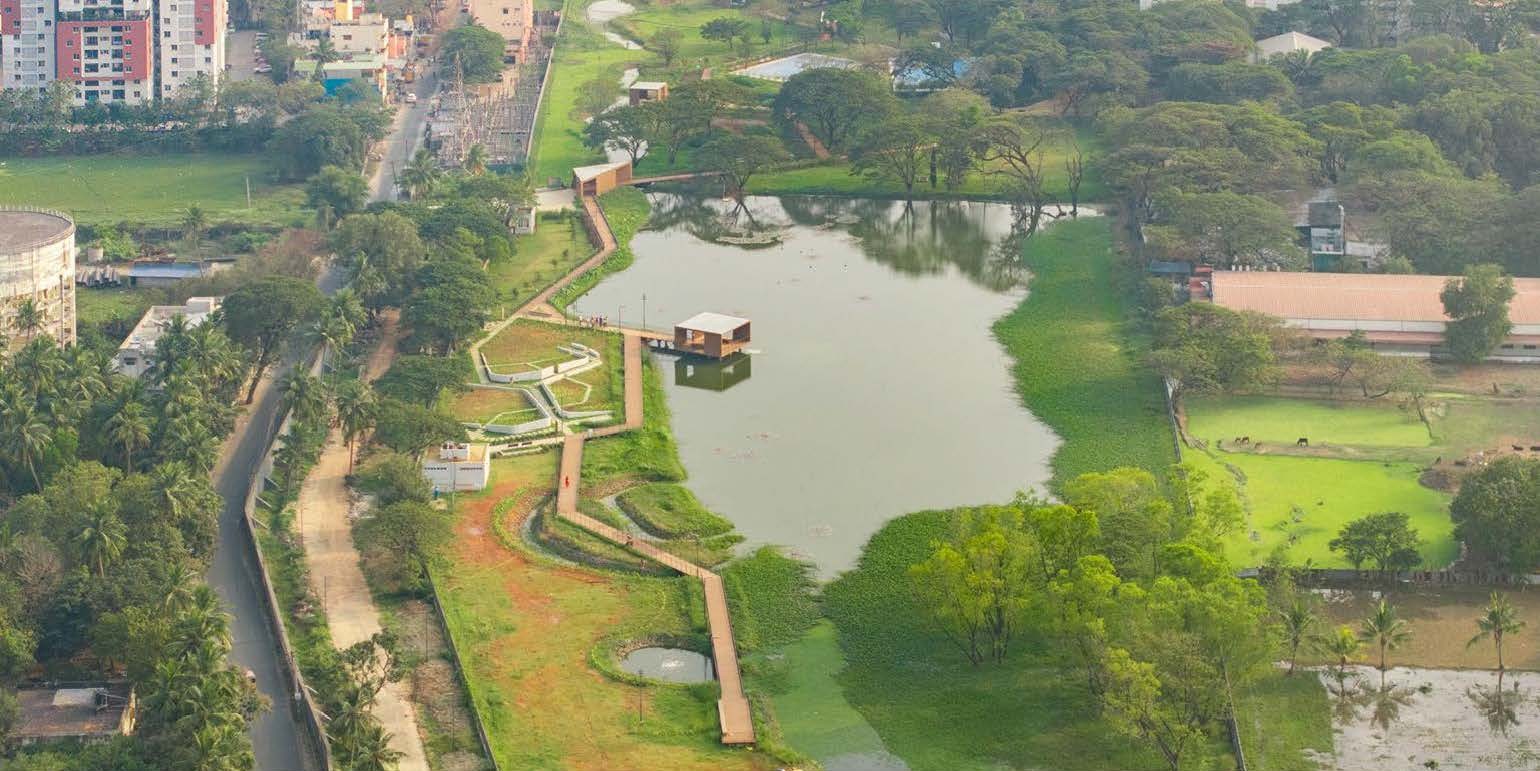
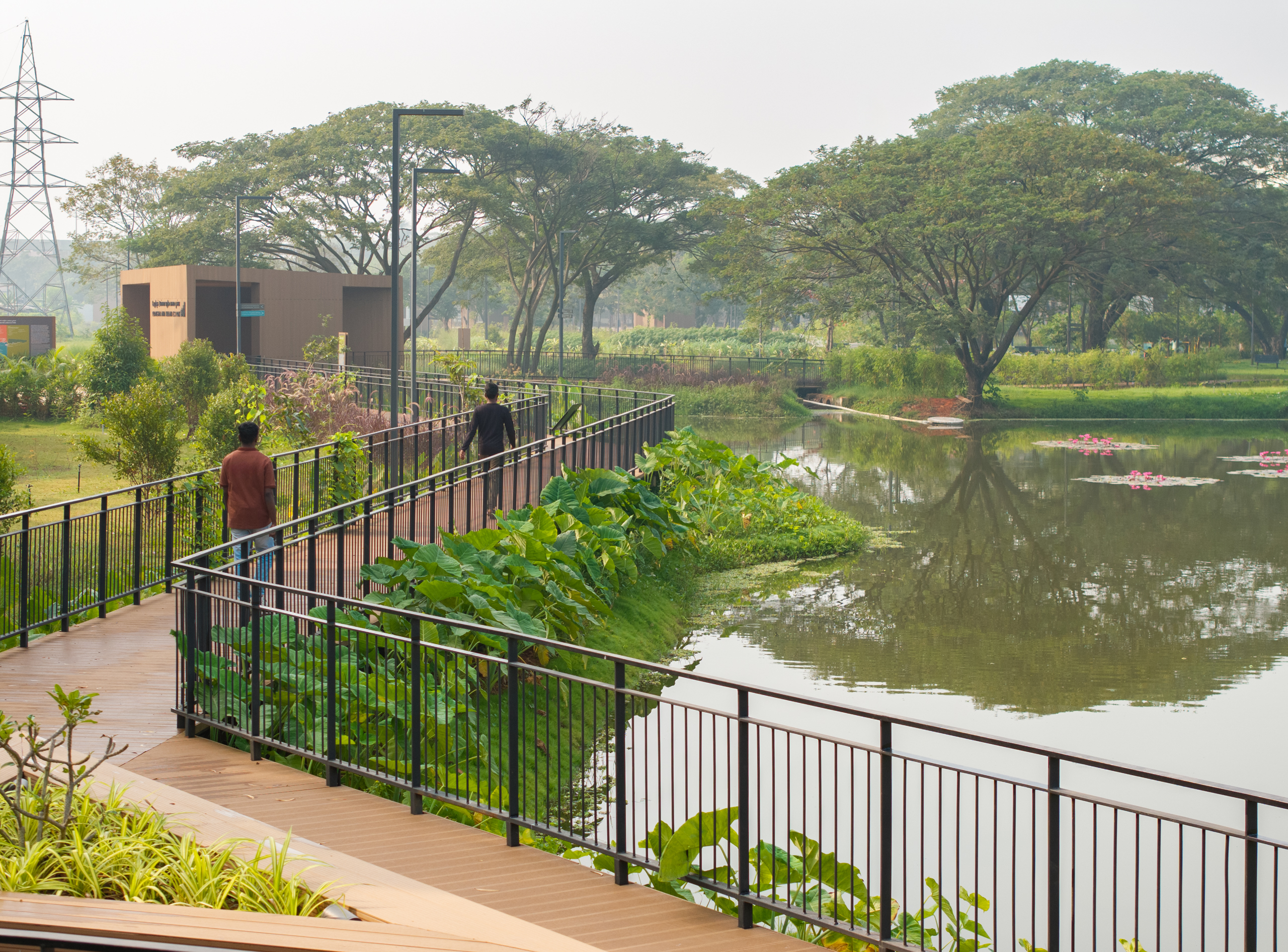
Conventional urban drainage moves rainwater away through drains, pipes, and channels. Sponge City approaches instead use distributed blue-green infrastructure to capture rainfall close to where it falls, slow runoff, and create space for temporary storage and infiltration, complementing rather than replacing conventional systems. The Dr. M. S. Swaminathan Eco-Wetland Park in Chennai, designed by ISD Foundation’s consortium partner, Sponge Collaborative, transforms a degraded 16.6-acrewetland and former parking area into restored water bodies, vegetation, bioswales, and floodable open space. The recreated wetland landscape functions as civic water infrastructure, with approximately 30,000 cubic meters of storage designed for a 25-year storm event. While these are important design figures, they do not yet tell us how much economic flood loss the park prevents.
But there is strong evidence that well-designed blue-green infrastructure can significantly reduce runoff. A 2025 global meta-analysis of fifty field-scale bioretention systems found 63% average stormwater retention and a 74% reduction in peak flow.[vi]In a different coastal context in Florida, Swiss Re Institute found that areas with high levels of natural coastal habitat protection had 42%–65% lower insured flood-loss frequency from lower-severity storms than areas with less coastal protection.[vii] The challenge is translating such evidence to specific urban systems and decisions about what risk is reduced, for whom, and how risk reduction can be measured financially.
ISD Foundation is leading a two-year project in Chennai and Mumbai, funded by Swiss Re Foundation, to help the two cities plan, design, and implement high-quality urban NbS. Research and municipal capacity building will be followed by ten pilot Sponge Parks designed as living laboratories for construction, monitoring, and maintenance. The pilots are too small to change an insurer’s view of citywide flood risk on their own. But they can test how the physical performance of urban NbS can be measured in ways that support larger decisions about risk, investment, and financial protection.
The missing link: proving that risk has changed
A recurring lesson from interviews conducted for this article is simple: reducing runoff is not the same as demonstrating that financial risk has been meaningfully reduced.
For insurers and public finance decision-makers, storage volume is only the starting point. They need to understand how an intervention changes flooding across a larger area, including flood depth, extent, and duration; which people, buildings, businesses, roads, and public services are less exposed; and how much damage or disruption is expected to be avoided. That chain allows physical performance to be translated into lower expected economic losses.
The lack of standardized, long-term performance data is one reason nature-based infrastructure is still harder to represent in catastrophe models than familiar engineered defenses such as levees or floodwalls. But cities do not need to wait for decades of claims history: risk can be modeled before construction by comparing scenarios with and without proposed NbS interventions, and those projections can then be tested through performance monitoring. Where insurance penetration is low, changes in physical hazard and economic loss may matter more than insured claims. Residents and businesses can also document where flooding occurred, how severe it was, and what it cost.
Scale adds another dimension. One small park may have almost no effect on an insurer’s overall risk picture, even if it performs well locally. A comprehensive network of Sponge Parks and drainage improvements that measurably changes flooding across a catchment, district, or city has a much greater chance of becoming financially relevant. This reflects how insurers think: risk is assessed within wider portfolios and concentrations of exposure, not as isolated design projects.
Urban flood resilience, therefore, has to be understood as a system. A high-performing park cannot compensate for blocked drains, poor maintenance, or bottlenecks elsewhere. Understanding local conditions and engaging local stakeholders are part of that system. Municipal departments, infrastructure operators, businesses, and communities carry different parts of the risk, while community knowledge can reveal impacts that models miss and identify which losses matter most. Demonstrating resilience therefore requires connecting site performance and local knowledge with catchment hydrology, exposed assets, maintenance, and institutional coordination.
Who finances risk prevention?
The economic benefit of prevention is widely shared, which is precisely what makes it difficult to finance. A Sponge Park may reduce household losses, business interruption, municipal emergency spending, credit risk, and insurance claims at the same time. These benefits are real, but they accrue to different actors over different periods and are mostly avoided costs rather than new revenue.
Direct insurer financing is therefore difficult: insurance contracts are short, customers can move, and competitors share the benefit of public risk reduction. As institutional investors, insurers also need dependable cash flows. NbS can still add value within a larger infrastructure investment by reducing disruption and making the wider asset more resilient.
Amore realistic near-term approach is to finance prevention and financial protection through complementary mechanisms. Public, municipal, development, or climate finance can fund nature-based infrastructure, while insurance covers losses that prevention cannot eliminate. The key is to identify who benefits from reduced flood losses, who has the incentive and capacity to finance prevention, and how affordable insurance can protect vulnerable households and businesses against the remaining risks. Insurance-sector expertise can help quantify avoided losses and strengthen the case for investment.
Risk reduction can influence insurance directly. If flood risk demonstrably falls, it may eventually affect premiums, deductibles, coverage limits, or an insurer’s willingness to provide coverage. The most important benefit may not be a premium discount. As climate risk rises, nature-based adaptation measures may help keep homes, businesses, and infrastructure insurable.
Insurance can also protect the NbS project itself against external events, an emerging role illustrated by ecological-restoration insurance.[viii]The timing of insurance expertise also matters. Insurers and risk specialists are most useful when involved during a project’s planning stage, so that relevant baselines, monitoring, and maintenance requirements are built in from the outset.
From physical protection to financial protection
India’s large natural-catastrophe protection gap brings the discussion back to the people who are not insured. For low-income communities, the value of a Sponge Park begins with the losses it prevents, not with a change in an insurance premium. But severe events can still overwhelm physical infrastructure, leaving households with immediate financial needs.
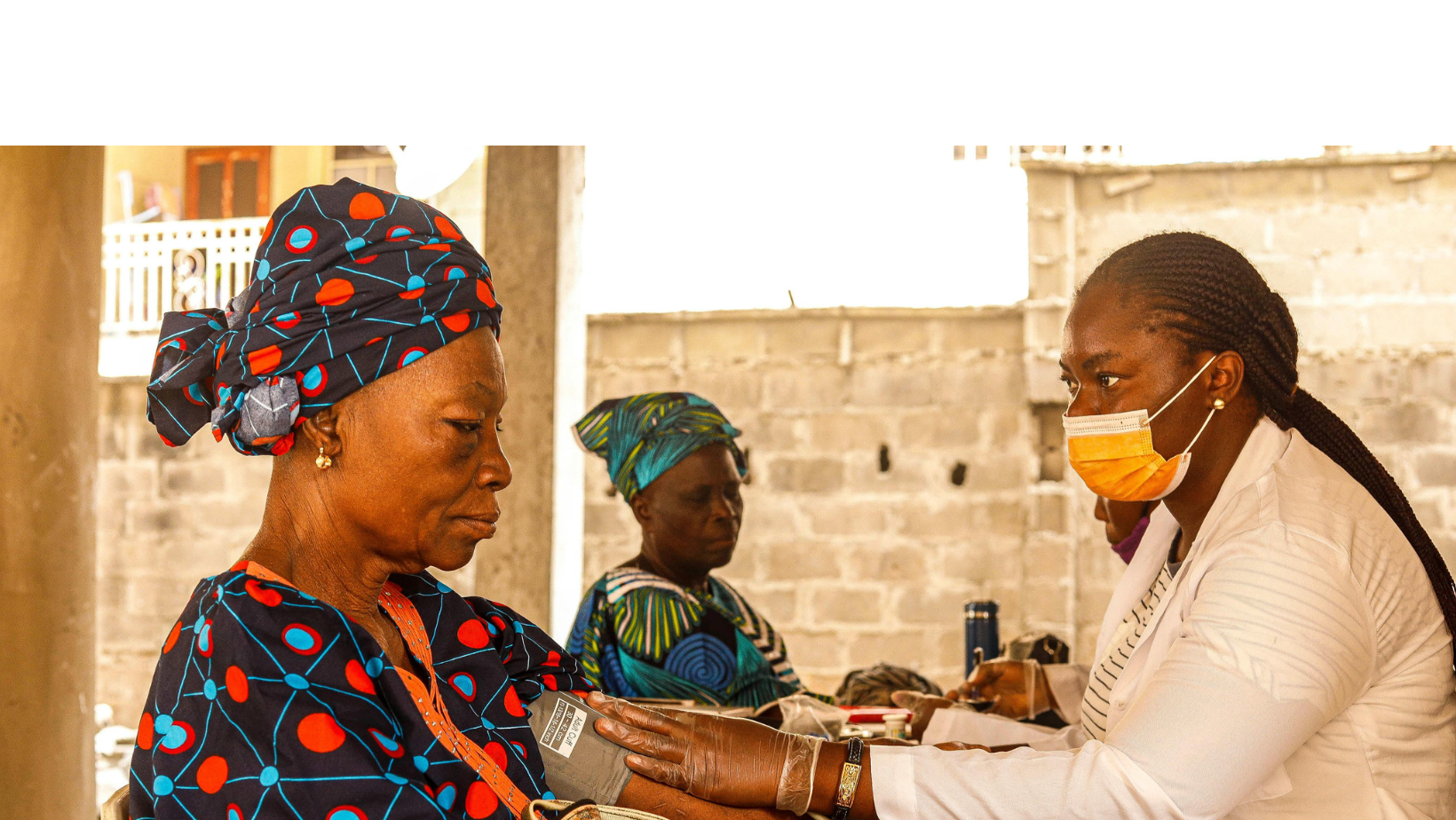
Those needs may look very different from the value of a house. Mahila Housing Trust(MHT) makes this distinction practical by surveying lost income, additional expenses, existing coverage, ability to pay, and the payout households would actually need before designing climate-risk insurance.
MHT’s experience also shows that a technically sound product can fail if people do not trust it or find value in it. Its heat-insurance trigger was revised to provide smaller, more frequent payouts after several locations saw no payouts with the initial trigger which was calibrated for the most extreme heat waves occurring rarely. Inclusive products must balance actuarial logic with affordability, tangible value, and trust.
Parametric insurance can help because it pays once an agreed threshold is reached without requiring each household to prove individual losses. That simplicity matters where conventional claims can be burdensome for people with limited documentation or literacy. But there is a trade-off: detailed measures such as flood depth or extent may better reflect how Sponge Parks change physical risk, while simpler rainfall-based triggers are easier to administer. MHT and its partners are now developing excess-rain coverage, using historical weather data and household financial-loss research to set triggers and payouts.
The harder question is who pays. MHT’s experience suggests that early philanthropic support can help establish a product, while longer-term models may require public subsidy and some community contribution. In its current heat product, women pay a small share of the premium and the remainder is subsidized. Trusted intermediaries do more than aggregate policyholders: they build understanding, document losses, assess willingness to pay, and connect communities with insurers and modelers.
SCBF’s existing work in India provides relevant examples. Blue Marble and SEWA are working on income protection for women in the informal sector against extreme heat and excess rainfall,[ix]alongside a separate SCBF-supported initiative with MHT, CelsiusPro, and GoDigit.[x]Neither initiative is linked to Sponge Parks, but both demonstrate how trusted community organizations can connect risk data and financial products to the realities of low-income households.
The combination with NbS remains untested, but its components already exist. A city could invest in Sponge Parks and drainage improvements; communities could help establish flood and financial-loss baselines; monitoring could test whether risk falls; and trusted local organizations could identify who remains exposed. Insurance could then address part of the risk that physical prevention cannot remove.
For the Chennai and Mumbai pilots, the immediate priority is to build the evidence needed to inform larger-scale investment and financial protection. This means understanding historical flooding and household losses, measuring how nature-based solutions reduce risk, and identifying the financial losses that remain.
Moving from pilots to scale will require three things: credible evidence of avoided economic losses; financing arrangements that support the construction and long-term maintenance of nature-based infrastructure; and affordable insurance solutions designed around the needs of vulnerable communities.
The opportunity is to bring these elements together - combining effective flood prevention with financial protection against the risks that cannot be eliminated. Doing so could help cities, insurers and development partners invest more effectively in climate resilience while improving protection for the communities most exposed to flooding.
Acknowledgments
The article draws on interviews conducted between September and November 2026 with experts - Bijal Brahmbhatt (Mahila Housing Trust), Samuel Brown(Nature Finance), Henri Douche (SCOR), Alison Drill (Swiss Re), Saoirse Jones (Zurich Resilience Solutions), Nadica Jovanovska-Boshkovska (Europa Re),Gillian Rutherford-Liske (Swiss Re), Gian Semadeni (Gallagher Re), and Mario Wilhelm (Rift Partners). The author gratefully acknowledges their time, valuable insights and contributions to this article.
[i] World Bank. (2025). Towards resilient and prosperous cities in India. https://www.gfdrr.org/en/publication/towards-resilient-and-prosperous-cities-india
[ii] World Bank. (2025). Towards resilient and prosperous cities in India. https://www.gfdrr.org/en/publication/towards-resilient-and-prosperous-cities-india
[iii] Aggarwal,R., Banerjee, C., Dave, A., & Puttaiah, M. H. (2025). India’s economy and insurance market: Growing rapidly, but mind the risk hotspots. Swiss Re Institute. https://www.swissre.com/institute/research/topics-and-risk-dialogues/economy-and-insurance-outlook/india-economy-insurance-market-growth.html
[iv] Aggarwal, R., Banerjee, C., Puttaiah, M. H.,& Singh, P. (2024). India’s insurance market: Growing fast, with ample scope to build resilience. Swiss Re Institute. https://www.swissre.com/institute/research/topics-and-risk-dialogues/economy-and-insurance-outlook/india-insurance-market-growing-fast-build-resilience.html
[v] Kelso, M. A., Taylor-Burns, R., Franco, G., Ingram, J. C.,Reguero, B. G., & Beck, M. W. (2026). Advancing nature-based insurance to protect people and nature. Communications Earth & Environment, 7,Article 540. https://doi.org/10.1038/s43247-026-03753-z
[vi] Sabbagh, M., Browne, D., Pickering, L., Lintern, A., & Winfrey,B. (2025). Urban stormwater bioretention reduces runoff and improves water quality: A global meta-analysis of field studies. Journal of Hydrology, 663,134163. https://doi.org/10.1016/j.jhydrol.2025.134163
[vii] Retsa, A., & Rutherford-Liske, G. (2025). Natural habitat scan reduce flood losses. Swiss Re Institute. https://www.swissre.com/institute/research/topics-and-risk-dialogues/climate-and-natural-catastrophe-risk/coastal-and-flood-protection-natural-habitats.html
[viii]SCOR’s NatReCo initiative insures ecological-restoration projects against external events that disrupt recovery or management. SCOR is exploring how the approach could extend to urban nature-based solutions. Interview with Henri Douche, Head of Product & Innovation at SCOR, September 23, 2026.
[ix] Swiss Capacity Building Facility. (2024). Income protection insurance for women in the informal sector against extreme heat and excess rainfall [Project factsheet]. https://cdn.prod.website-files.com/65c6255df7e1fa15b09a2658/670d0f5b3be70e8870d614e1_SCBF_Factsheet_PUW%202024-01_BlueMarble%20%26%20SEWA_India%20-14%20Oct%202024_Final.pdf
[x] Swiss Capacity Building Facility. (2025). Protecting climate-vulnerable women through innovative insurance solutions [Project factsheet]. https://cdn.prod.website-files.com/65c6255df7e1fa15b09a2658/6942c6877cea875d3fe8680e_SCBF_Factsheet_PUW%202025-09_CelsiusPro%20MHT_India_Final.pdf
Cover picture courtesy: Sponge Collaborative